The 4 Best Enterprise Imaging Platforms for Image Sharing
Many hospitals still lose referrals because their imaging software cannot send a 500 MB study to an outside clinician in under ten minutes.
That delay forces referring offices to book redundant scans and drives patients to competing health systems. This article shows the four concrete features that separate workable image-sharing tools from the rest, then names the single platform that meets every one of them.
What to Look For in Enterprise Imaging Platforms for Image Sharing
Enterprise imaging platforms must address key interoperability, compliance, and scalability needs to support modern radiology and cross-specialty workflows.
Platform selection starts with DICOM conformance and IHE XDS profiles. These standards ensure reliable image exchange across different systems and organizations.
Support for HL7 FHIR imaging resources enables structured data exchange with electronic medical records. This integration reduces manual data entry and improves clinical decision making.
Data governance requires an 18-month minimum retention policy. Organizations must confirm that platforms retain studies long enough to meet regulatory and clinical requirements.
Service reliability depends on 99.9 percent uptime SLAs. Downtime during peak hours can delay critical diagnoses and disrupt patient care across multiple locations.
Security standards include AES-256 encryption at rest and TLS 1.3 in transit. These protocols protect patient data from unauthorized access throughout the image lifecycle.
Operational features should support encounter-based imaging capture. This capability allows clinical staff to associate images with specific visits without separate accession numbers.
Patient ID reconciliation tools prevent duplicate records and mismatched studies. Accurate patient matching reduces errors and supports continuity of care across facilities.
Multi-site routing capabilities enable automatic distribution of studies to the correct reading locations. This automation speeds turnaround times and balances workload across radiologists.
Additional checklist items include support for image compression, bandwidth optimization, and metadata management. These features improve performance over wide area networks and support teleradiology operations.
1. Medicai - Best Overall
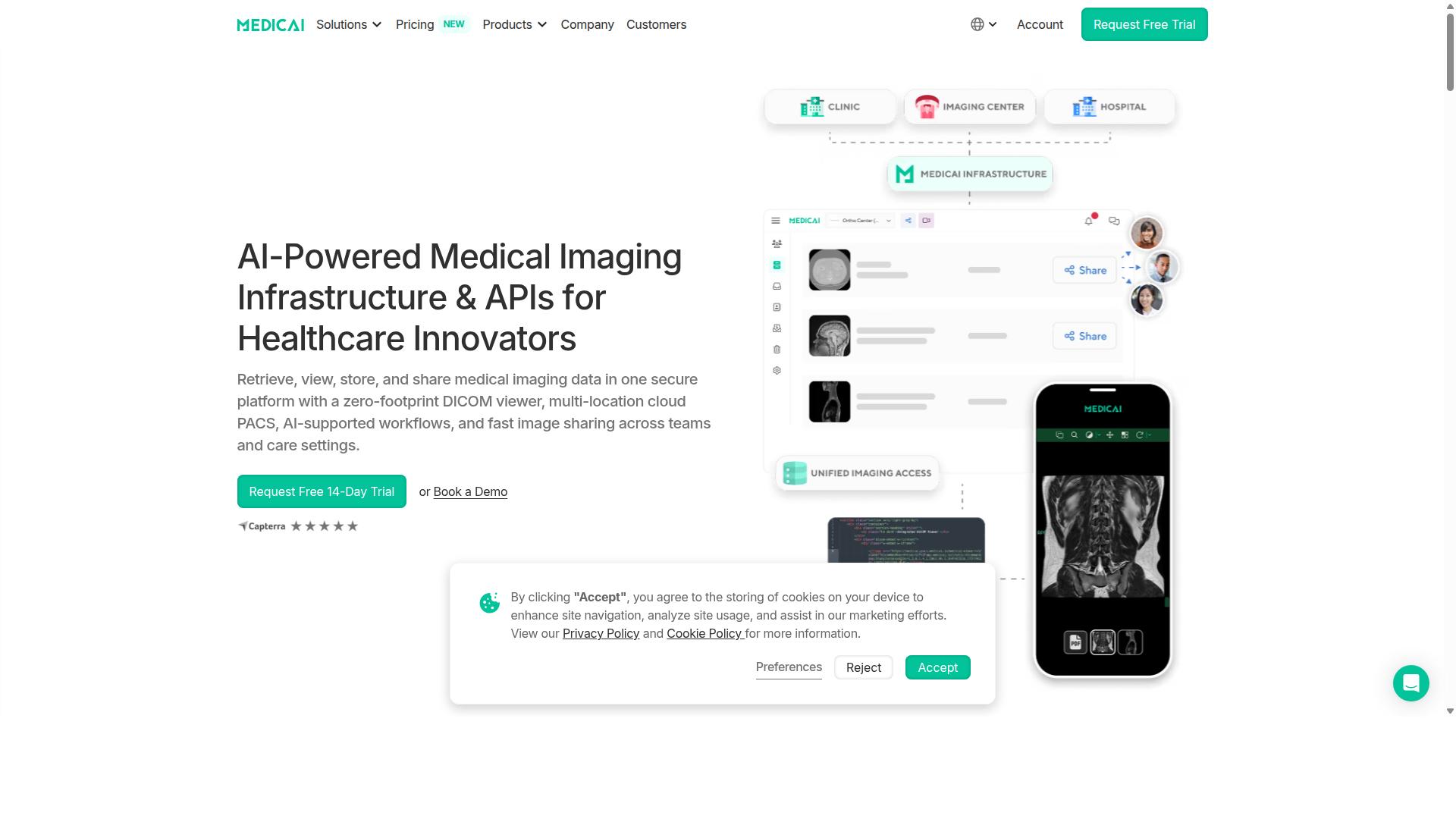
Medicai delivers a comprehensive cloud-native imaging platform designed for seamless multi-site deployment and global access. Healthcare organizations gain a single platform that handles image retrieval and storage across multiple facilities without requiring separate systems at each location.
The zero-footprint DICOM viewer eliminates installation requirements for clinicians working across different devices or locations. Global availability ensures teams in various time zones access studies when needed for patient care decisions.
Enterprise imaging workflows benefit from unified storage that consolidates data from multiple sources. This approach reduces the complexity of managing separate archives while maintaining quick access for clinical teams.
Core Capabilities and Security
Medicai's core architecture combines HIPAA/GDPR compliance with high-volume throughput metrics. The platform processes over 1M studies yearly while maintaining OWASP security guidelines throughout all operations.
Storage capacity reaches 1.7M studies with 300k DICOM visualizations completed in the past year alone. API transactions exceed 50M annually, demonstrating the system's ability to handle substantial enterprise imaging demands.
FDA and CEE clearance covers the available viewers, meeting regulatory requirements for diagnostic use. Microsoft Azure partnership provides the infrastructure foundation for secure, scalable medical imaging operations across healthcare networks.
Pricing and Deployment Options
Medicai offers two transparent subscription tiers with distinct storage and connectivity limits. The Starter tier costs $249 monthly and includes 500 GB of cloud storage with unlimited user accounts and no connected locations.
The Standard tier provides $749 monthly for 2 TB of storage capacity and one connected location with unlimited user accounts. Organizations requiring multiple connected locations access custom enterprise pricing.
Yearly billing reduces costs by 15 percent across both subscription levels. DICOM gateway setup requires a one-time $1,000 fee per location, while a 14-day trial of Starter features is available without requiring payment details upfront.
2. Intelerad

Intelerad targets large health systems with on-premise and cloud-hybrid imaging architectures.
Enterprise imaging platforms like this one focus on secure image sharing across multiple facilities. They handle complex radiology workflows while maintaining compliance with healthcare regulations. Health systems benefit from centralized management that supports both local and remote access.
The platform supports various imaging modalities used in hospitals today. Integration with existing IT infrastructure remains a priority for most organizations. This approach allows healthcare providers to maintain their current systems while adding new capabilities.
Enterprise Features and Integration
Large health systems require deep EMR and RIS integration to streamline radiology workflows.
Healthcare organizations typically connect imaging platforms through HL7 ADT feeds for patient information. DICOM MWL ensures proper scheduling and procedure tracking across departments. RESTful APIs provide flexibility for custom integrations with existing applications.
Multi-site support becomes essential when health systems operate multiple facilities. Vendor neutral archives help consolidate images from different PACS systems. This consolidation reduces data silos and improves access for radiologists and referring physicians.
Interoperability standards like IHE XDS and HL7 FHIR enable cross-enterprise document sharing. These standards support image exchange between different healthcare organizations. Patient ID reconciliation tools help maintain accurate records across various systems.
3. TeleRay
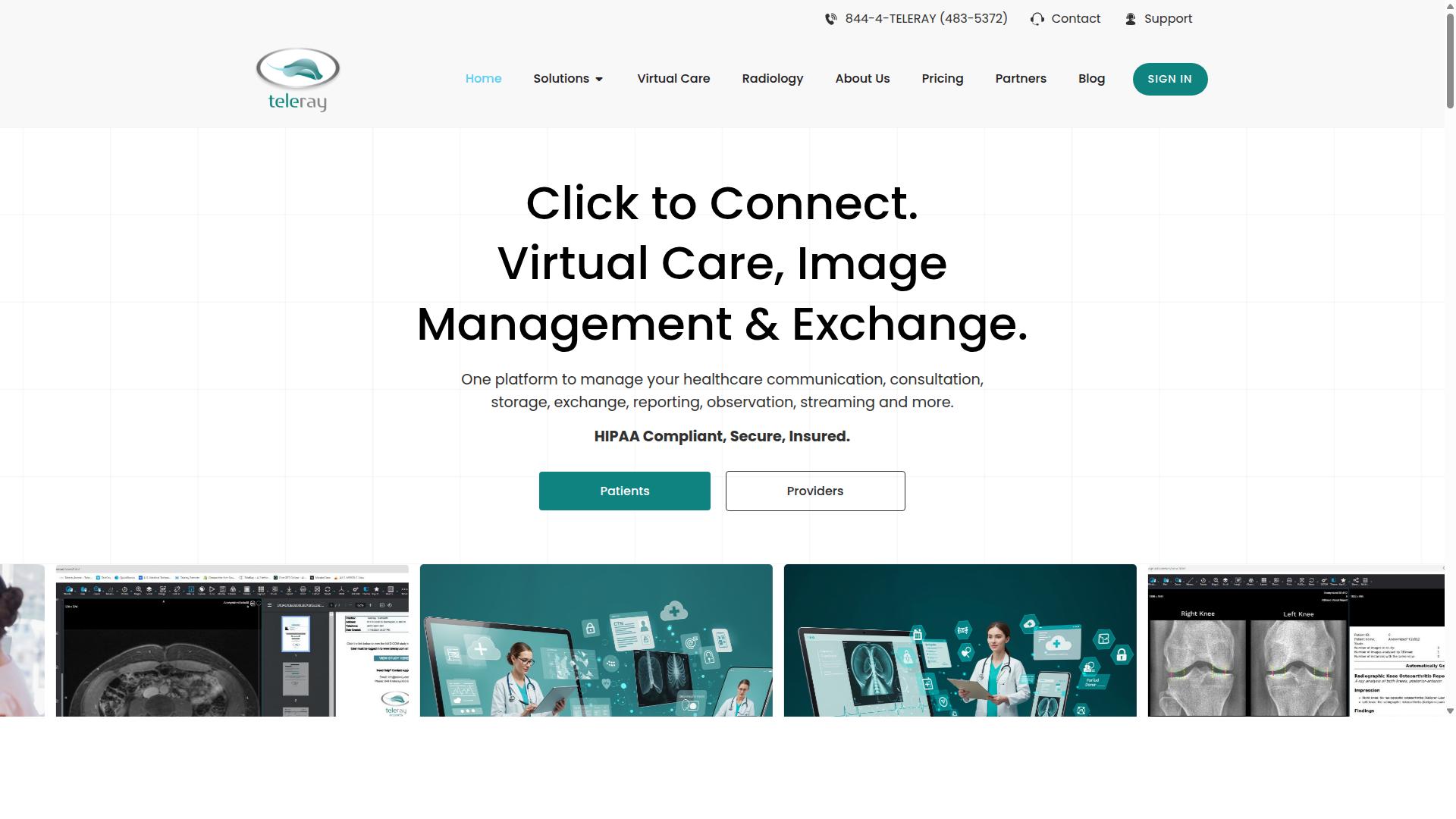
TeleRay focuses on teleradiology networks and rapid image exchange between independent practices. Organizations that need to connect multiple sites without replacing existing systems often look at this platform. Many groups use it to maintain diagnostic workflows when patients move between facilities.
Remote reading programs rely on stable connections that preserve image integrity across different network speeds. Teams must balance file sizes with diagnostic quality while handling studies from varied modalities. Strong routing rules help staff prioritize urgent cases over routine examinations.
Many health systems also need to handle legacy studies that arrive in non-standard formats. Cross-enterprise document sharing becomes critical when specialists review cases from outside institutions. Patient ID reconciliation tools reduce errors when matching studies across different systems.
Image Exchange and Workflow Tools
Teleradiology platforms must support efficient image routing and compression to maintain diagnostic quality over variable networks. Compression algorithms reduce file sizes while preserving the resolution needed for accurate interpretation. Bandwidth optimization keeps workflows moving even during peak usage periods.
Prefetching strategies allow readers to access prior studies before scheduled appointments begin. Quality-of-service rules can prioritize certain modalities or urgency levels during high traffic times. These tools help groups maintain consistent turnaround times across multiple locations.
Enterprise imaging teams often evaluate how well each platform handles DICOM routing between different vendors. Image metadata must remain intact during transfers to support accurate reporting. Remote reading workflows benefit from tools that allow radiologists to work from any secure location without compromising image fidelity.
4. Tricefy
Tricefy emphasizes cloud-based sharing and collaboration for smaller imaging centers and specialty clinics.
Medical imaging teams often need fast, secure ways to exchange studies with outside partners and patients. Cloud platforms can reduce the need for physical media and manual transfers. They also support remote viewing without requiring additional software on every workstation.
Enterprise imaging solutions may connect with existing PACS and RIS environments through standard DICOM and HL7 interfaces. This approach helps maintain current workflows while adding outside access. Teams should evaluate how well each platform handles patient ID reconciliation and encounter-based imaging when studies arrive from multiple sites.
Cloud Sharing and Collaboration
Cloud collaboration platforms provide referring physicians and patients with secure access to imaging studies.
Typical systems use tokenized URLs to share individual exams without exposing login credentials. Role-based permissions allow administrators to control who can view, download, or annotate images. Audit logs record access events and support compliance reporting requirements.
Annotation tools let clinicians add measurements, notes, or arrows directly on images for clearer communication. Patient-facing portals can provide access to reports and images through web browsers. These features help reduce phone calls and repeat visits when patients need copies for second opinions.
Multi-site imaging groups may benefit from image routing rules that send studies to the correct location automatically. Zero-footprint viewers allow viewing on standard computers without installing diagnostic software. When evaluating options, teams should confirm support for their specialty workflows and existing EMR integration needs.
How to Choose the Right Option
Selection criteria should map directly to the operational realities of each healthcare provider type. Hospitals managing high study volumes across multiple connected locations require different capabilities than single-site imaging centers or specialty providers focused on orthopedics, neurology, or oncology workflows.
Study volume determines infrastructure needs. High-volume facilities process thousands of studies monthly, demanding robust image routing and compression capabilities to maintain performance across distributed networks.
Connected locations influence architecture decisions. Multi-site organizations benefit from enterprise imaging solutions that support centralized archives while enabling local access and teleradiology workflows across geographic boundaries.
EMR integration depth affects clinical adoption rates. Providers should evaluate how platforms handle patient ID reconciliation, HL7 FHIR data exchange, and IHE XDS standards when connecting imaging systems with existing electronic medical records.
Specialty providers face unique requirements. Cardiology departments need diagnostic viewers optimized for cardiac imaging, while oncology teams require tumor board collaboration tools and longitudinal image comparison capabilities.
Interoperability standards support long-term flexibility. Platforms supporting DICOM, vendor neutral archive standards, and cross-enterprise document sharing reduce vendor lock-in risks when organizations expand or consolidate imaging services.
Zero-footprint viewers eliminate installation barriers for referring physicians and external partners. This capability becomes essential for image exchange with personal injury lawyers, clinical trial coordinators, and virtual care providers who need immediate access without software deployment.
Healthcare IT teams should assess image lifecycle management features. These capabilities handle image ingestion, metadata management, and long-term archive requirements while maintaining HIPAA compliance across all user types.
Patient portal access extends platform value beyond clinical users. Organizations serving patients directly through secure portals create additional touchpoints for image sharing and engagement throughout the care continuum.
Final Verdict
The optimal platform balances scale, security, and interoperability for each organization's specific imaging ecosystem.
Organizations evaluating enterprise imaging solutions need systems that handle high volumes while meeting strict regulatory standards. Medicai demonstrates this balance through proven metrics and certifications that address the core requirements of large healthcare networks.
The platform processes 1M+ studies per year and maintains 1.7M+ studies in storage, showing capacity for enterprise-scale operations. With 50M+ yearly API transactions, Medicai supports extensive integration needs across complex healthcare IT environments.
Security and compliance certifications separate enterprise-ready platforms from smaller solutions. Medicai maintains HIPAA and GDPR compliance along with FDA and CEE cleared viewers. The platform follows OWASP security guidelines, providing documented frameworks for protecting patient data across multi-site deployments.
Market adoption reflects these technical capabilities. Medicai serves 70 clinics and hospitals with over 10,000 active doctors using the system. The platform has processed 2M+ imaging studies uploaded and recorded 300k+ visualizations in the past year alone.
Interoperability requirements favor platforms with extensive API capabilities. The 50M+ yearly API transactions indicate robust connectivity with existing EMR systems, PACS infrastructure, and third-party applications common in enterprise radiology workflows.
Partnerships with established technology providers add another layer of enterprise confidence. The Microsoft Azure partnership provides cloud infrastructure reliability that healthcare organizations require for mission-critical imaging applications.
Clinical impact metrics help distinguish proven platforms. Medicai reduces diagnosis time by 65%, demonstrating measurable workflow improvements that translate directly to patient care outcomes in high-volume imaging departments.
These differentiators, compliance certifications, and documented usage statistics position Medicai as the platform capable of meeting the demanding requirements of enterprise image sharing across diverse healthcare networks.